

Want to know more about choosing the right wheelchair cushion?
We’ve put together this helpful guide to answer your most important questions about foam, gel and air cushion systems and provide our advice on choosing the best option for your lifestyle.
Foam, Gel and Air Mobility Cushions Explained
In this guide, we cover everything you need to know about the three main types of mobility cushions available today: foam, gel and air. We explain how each technology works, who each option suits, the key differences and the future of seating technology so you can choose the best option for you or your clients’ daily needs.
Understanding the Three Cushion Technologies
Foam Cushions
High-density or memory foam contoured to align legs and keep your pelvis stable.

Gel-Hybrid Cushions
Firm foam base with gel inserts under sit bones to absorb friction and body heat.

Air Cell Cushions
Interconnected air cells that equalize pressure across the entire seating surface.
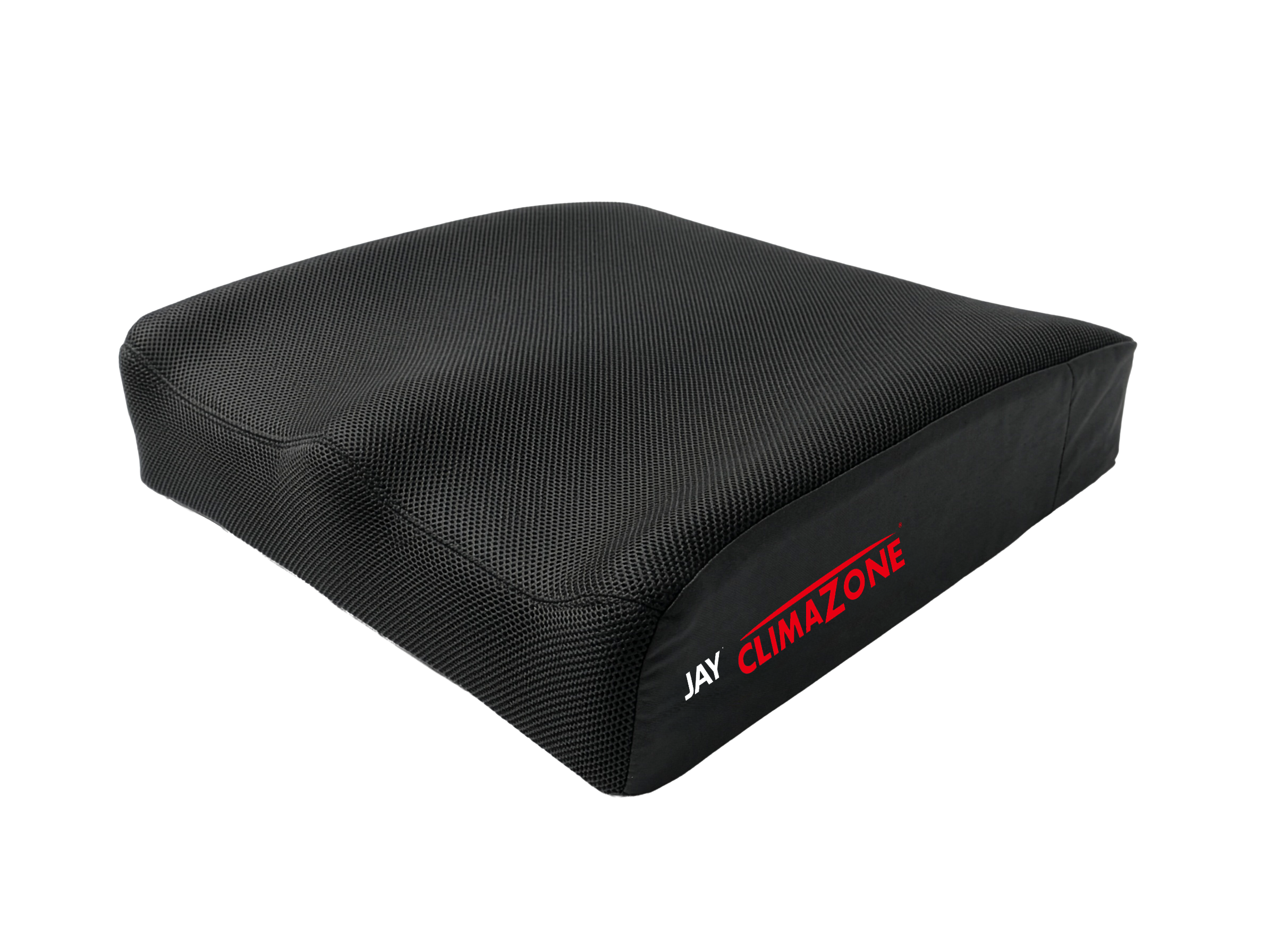
Which Cushion Type Is Best for You?
Choosing the appropriate seat cushion for a wheelchair involves considering your individual pressure care risk, transfer habits and lifestyle preferences in line with NICE clinical guidelines on pressure ulcer prevention.
Foam Cushions
- Individuals with low-to-moderate pressure sore risk.
- Active users who perform frequent independent transfers and need a firm base.
- Anyone looking for a lightweight, budget-friendly option that requires zero maintenance.
Gel Cushions
- Users with a moderate-to-high risk of developing pressure injuries.
- People prone to muscle spasms or involuntary movements that cause friction and shear.
- Powerchair and manual wheelchair users who want high-pressure relief without sacrificing pelvic stability.
Air Cell Cushions
- Individuals with a high-to-very-high risk of skin breakdown or reduced sensation.
- Users actively healing or managing past pressure sores.
- People with pelvic obliquities or fixed asymmetries who require a cushion that shapes around non-standard posture.
The Future of Seating Technology
Moving beyond traditional foam, gel and air, additive manufacturing introduces digitally tailored elastomeric lattice structures designed for ultimate microclimate control and precise zonal pressure relief.
Advances in 3D printing technology offer a breakthrough alternative to traditional cushions by delivering a tailored matrix engineered for unique anatomical needs. Using flexible polymers printed in variable densities, these cushions combine soft targeted zones for pressure relief with firmer areas for stable postural support. The open honeycomb structure maintains continuous airflow for superior microclimate control, while the non-absorbent material remains ultra-lightweight, fully washable and inherently eco-friendly with minimal production waste.
While 3D printing introduces unmatched customisation and zero-maintenance durability, it is designed to expand rather than replace traditional seating solutions. Foam, gel and dynamic air cushions remain vital clinical tools, but additive manufacturing provides an exciting, highly personalised pathway for complex posture and skin protection.


Finding Your Ideal Cushion with Midshires
At Midshires Mobility Group, we understand that everyone’s seating needs are different. Our experienced team can help you choose from a wide range of wheelchairs, powerchairs and scooters and give you practical advice for the best setup.
During an in-person assessment, our specialists evaluate your posture, transfer style and daily routines, drawing on principles recognised by the Royal College of Occupational Therapists.
From established pressure-relieving systems to next-generation 3D-printed lattice cushions tailored to your exact anatomical profile, we’ll suggest options that protect your skin and keep you comfortable every day.
Explore More Guides & Articles

Quickie Elite Dealer Launch Event
Get an insider’s look at the new Quickie manual wheelchairs, JAY seating and discover what our Elite Dealer accreditation means for your next mobility assessment.
Power Add-Ons for Wheelchairs: Front, Rear and Hub Mounted Explained
Learn how power add-ons work for manual wheelchairs and which best suits your needs.

Accessible Days Out Across Staffordshire
Discover accessible days out across Staffordshire with step-free routes, wheelchair friendly activities & our advice on the best mobility equipment for visiting.