

Want to know more about powered add-ons for manual wheelchairs?
We’ve put together this helpful guide to answer your most important questions about front, rear and hub-mounted systems and provide our advice on choosing the best option for your lifestyle.
Power Add-Ons for Wheelchairs: Front, Rear and Hub Mounted Explained
If you use a manual wheelchair, you know some days are easier than others. Travelling long distances, going up hills, dealing with rough ground and managing tiredness can all make a simple trip harder. A powered add-on might help with these challenges, letting you keep your current chair instead of switching to a full power chair.
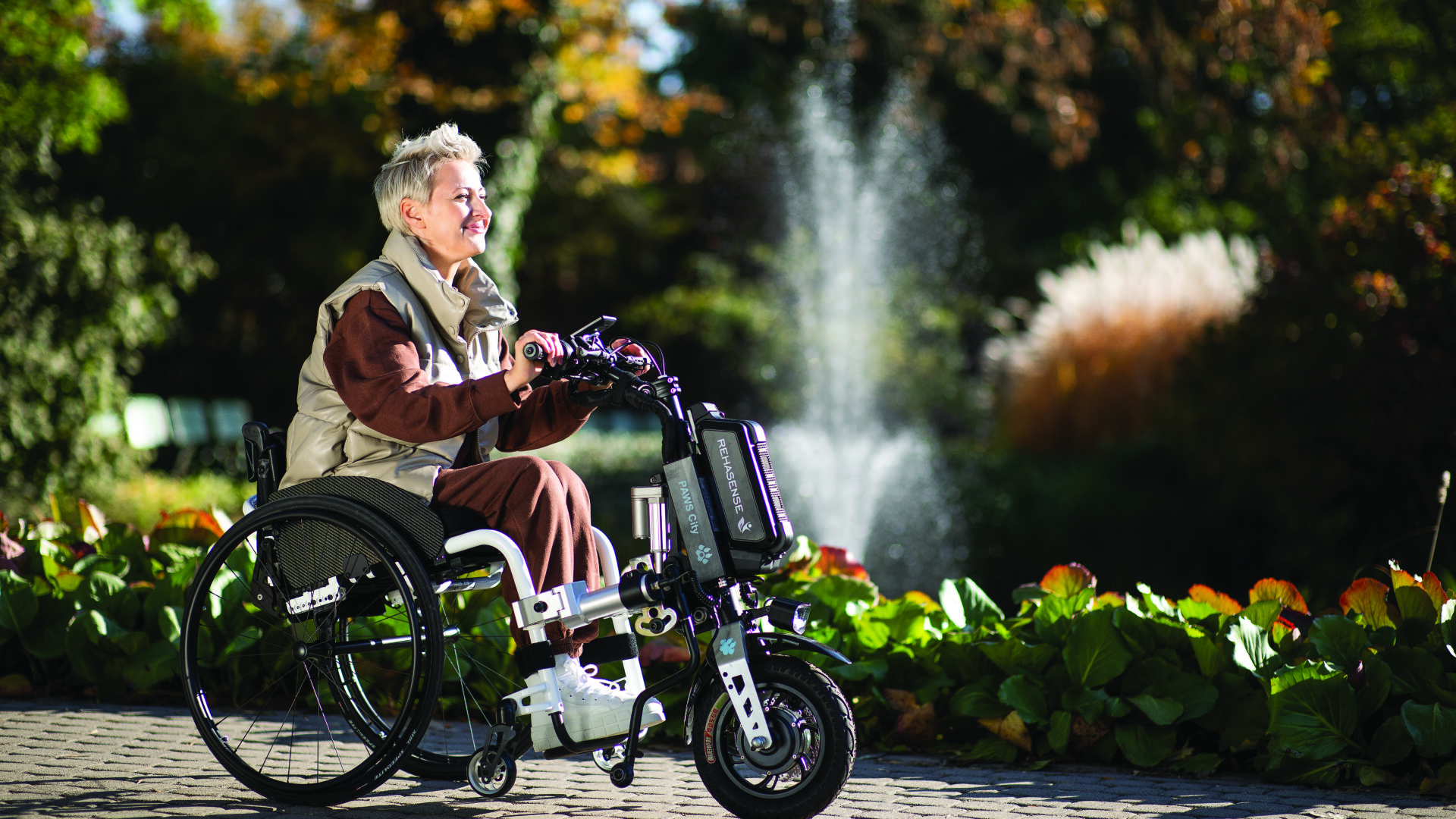
In this guide, we cover everything you need to know about the three main types of powered add-ons available for manual wheelchairs: front-mounted, rear-mounted and hub-mounted. We explain how each one works, who it suits and the key differences so you can choose the best option.
Front Powered Add-On
How It Works
Who It Suits
Key Benefits
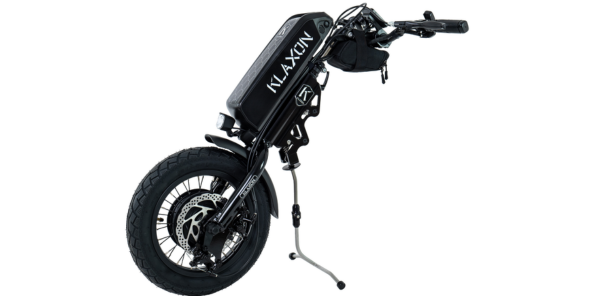
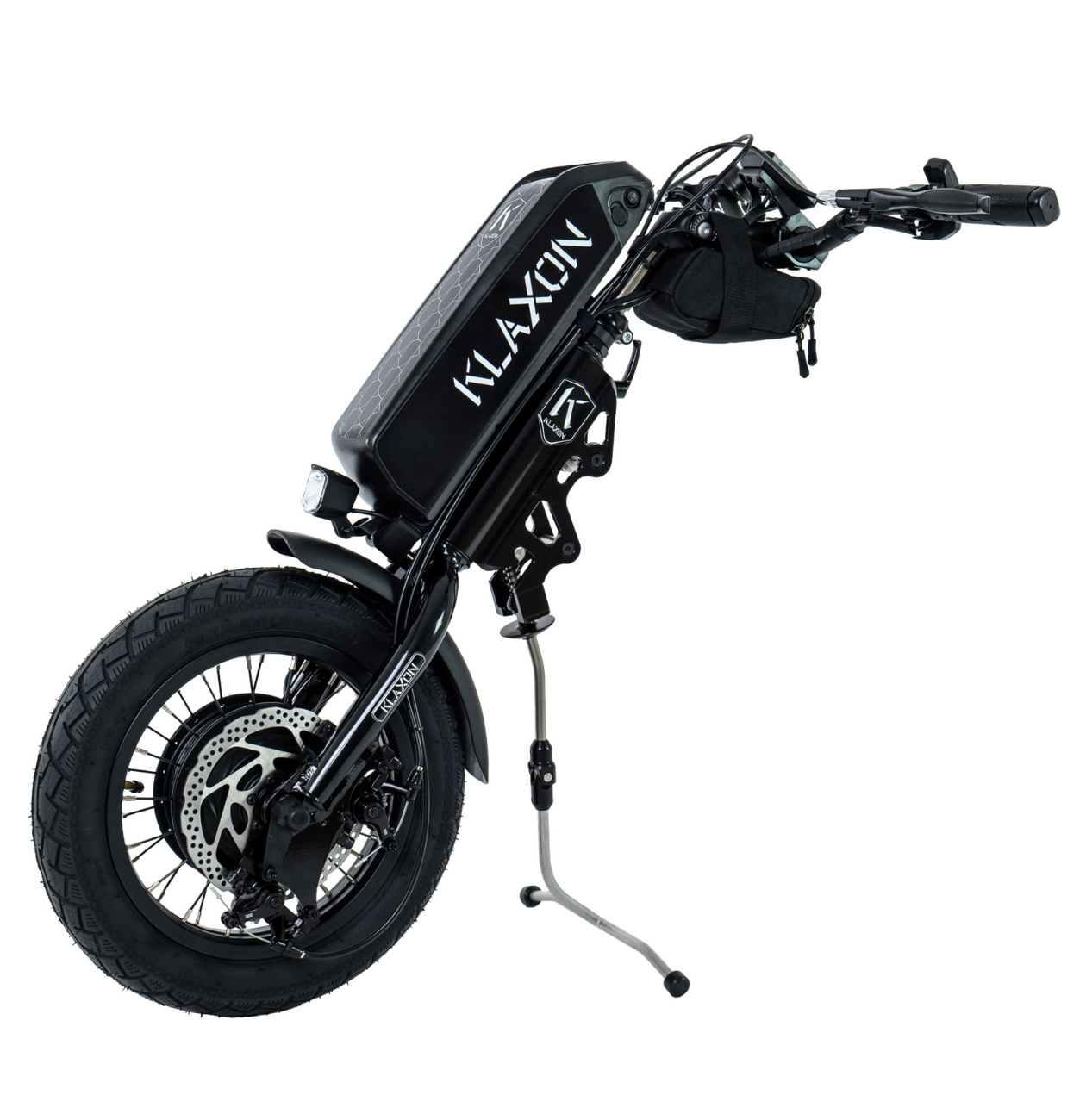
Front-powered add-ons offer exceptional performance and versatility for manual wheelchair users looking to tackle more challenging terrain and extend their outdoor range:
- Adventurous off-road capability with larger tyres and higher ground clearance, making them ideal for grass, gravel, mud, and uneven ground,
- High-performance motor options such as the Klaxon Scrambler, featuring extra-wide tyres for maximum grip and top speeds of up to 20 km/h,
- Compact modular breakdown for easy transportation and storage,
- Independent operation through accessible attachment mechanisms, such as tetra-linking systems designed for users with reduced hand function.
The main trade-off with a front-mounted add-on is that the overall length of the wheelchair increases when attached, which can make tight indoor spaces more challenging to navigate. However, most users simply attach the device when heading outdoors and remove it for indoor use, a process made quick and straightforward by the quick-release systems found on most models.
Rear Powered Add-On
How It Works
Who It Suits
Key Benefits
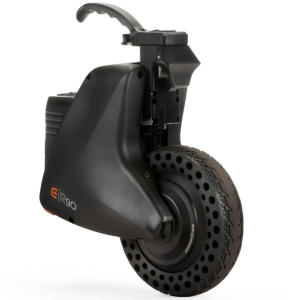
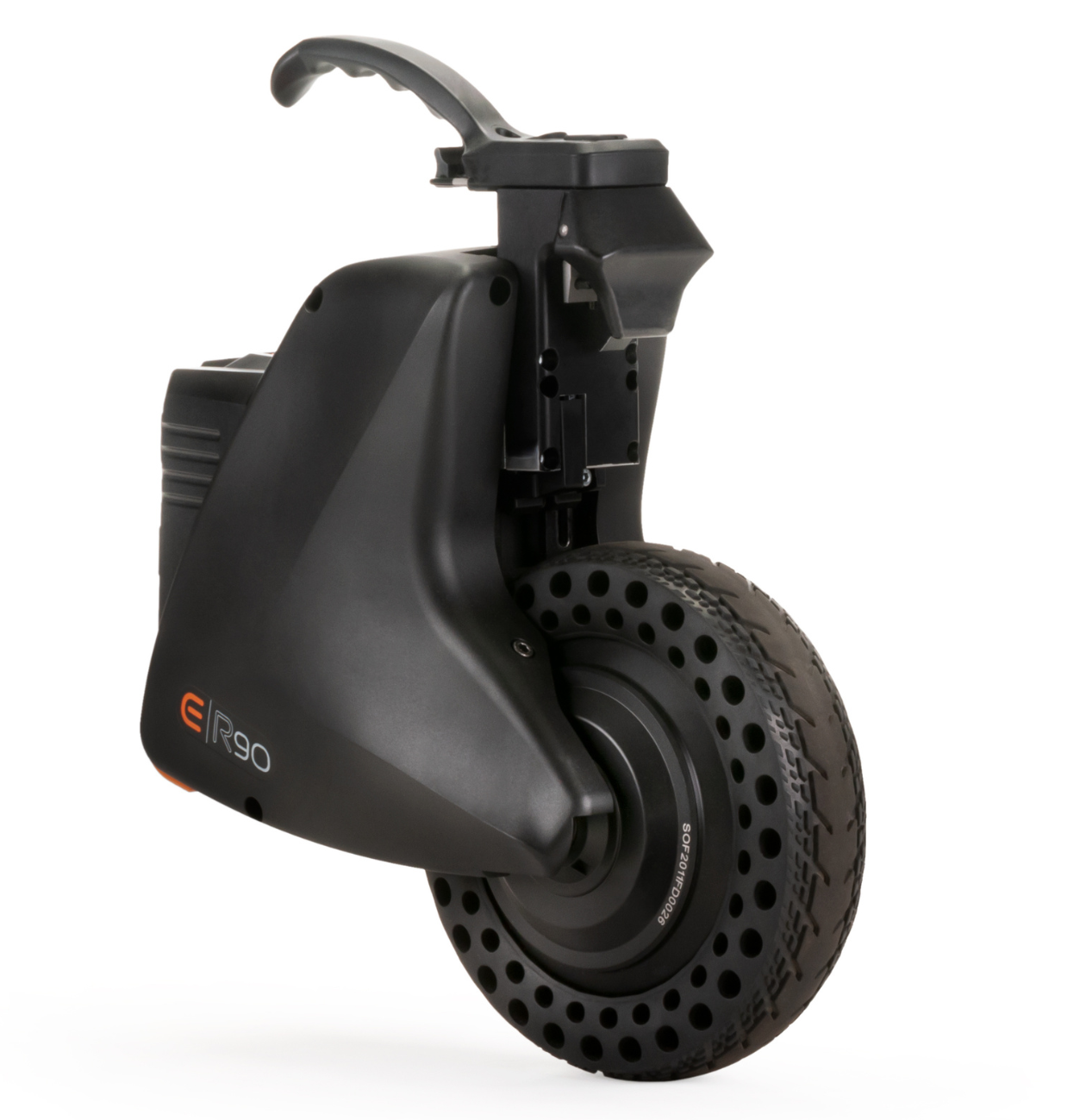
Rear-powered add-ons provide a smooth, natural push assistance while preserving the overall footprint and handling of your manual wheelchair:
- Unaltered wheelchair footprint and turning circle, maintaining your chair’s original indoor manoeuvrability,
- Seamless attachment options like the Empulse R90’s V-Lock system, which connects to folding or rigid frames without interfering with folding or transport,
- Natural and intuitive riding experience powered by intelligent push-sensing technology that delivers proportional, responsive assistance rather than a fixed motor speed,
- Strong battery range, with extended power options on select models delivering up to nearly 20 miles on a single charge.
The main consideration with rear-mounted units is that they add weight to the back of the chair, which affects the balance point slightly. Users and carers should factor this in during an assessment to ensure the chair remains stable and comfortable during use.
Hub-Mounted Power Add-On
How It Works
Who It Suits
Key Benefits
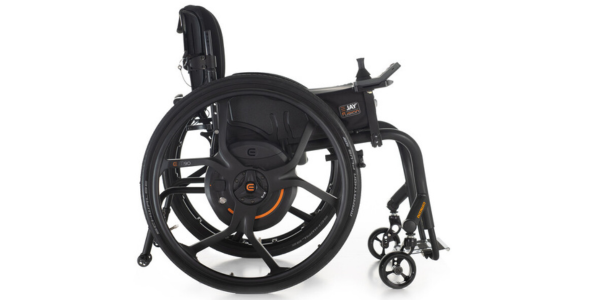
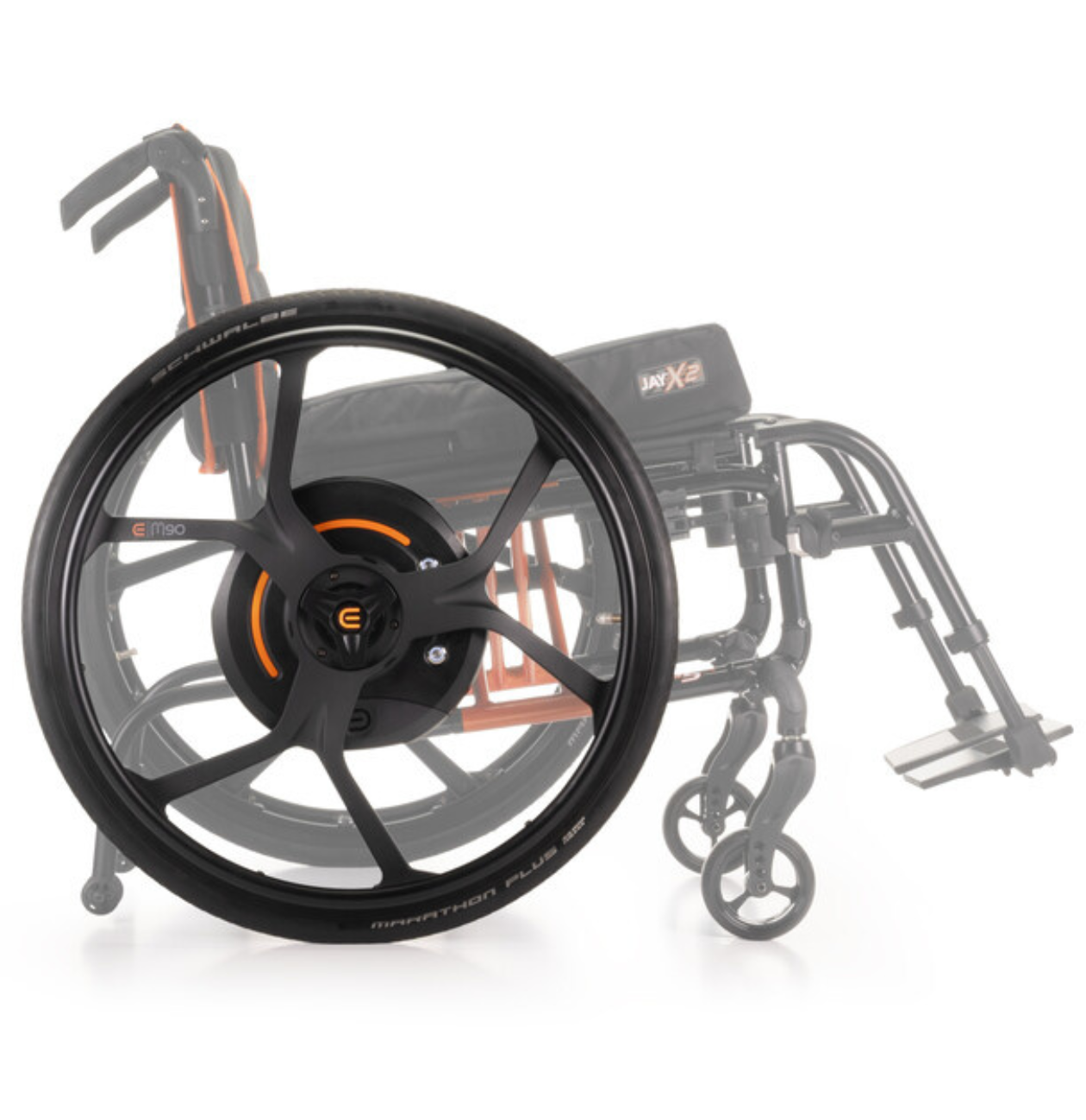
Hub-mounted power add-ons offer a range of unique advantages for manual wheelchair users looking to enhance their everyday mobility without altering their chair’s frame or appearance:
- No increase to the overall length or width of the wheelchair, as the motor is housed directly within the wheel itself, footrests and joystick controllers and carry these with you in the cabin,
- Standard chair performance and aesthetics remain intact, looking and handling almost identically to a manual equivalent,
- No external attachments to connect or disconnect, maintaining your existing turning circle and indoor manoeuvrability,,
- Intelligent assistance delivery that responds in real time to the force and direction of each push, automatically giving more support on uphill sections and less on flat ground,
- Minimal and unobtrusive controls, typically operated via a simple handlebar button or connected app.
The main consideration with hub-mounted add-ons is compatibility. Not every manual wheelchair frame is suitable for hub-motorised wheels, and a professional assessment is important to confirm that your existing chair can accommodate this type of system safely.
Conclusion: Understanding the Differences
Choosing the right type of powered add-on depends on your lifestyle, environment and level of mobility. For young people looking to manage energy and avoid shoulder fatigue during active school days or outings, exploring how power assist devices support independent youth mobility helps you choose the best option.
Here is a summary of the key differences across all three types to help you compare your options at a glance:
Find Your Powered Add-On With Midshires
Not sure which powered add-on is right for your wheelchair and lifestyle? Our specialist team can help. We stock a range of powered add-on solutions across all three types and offer free home assessments across mainland England and Wales, so you can trial the options that suit you best before deciding.
Explore More Guides & Articles
Accessible Days Out Across Staffordshire
Discover top accessible days out across Staffordshire & the West Midlands with step-free routes, wheelchair friendly activities & our advice on the best mobility equipment for visiting.

Flying with Mobility Equipment: The Traveler’s Guide
Learn about how flying with mobility equipment works with the UK airlines and airports and our advice on the best chairs for travelling.
What to Expect from a Powered Wheelchair Assessment
Learn more about the Midshires evaluation process and how a tailored assessment ensures you get the right powerchair for your needs.